ReportOperationsStrategic Intelligence Division12 min read
ReportOperations


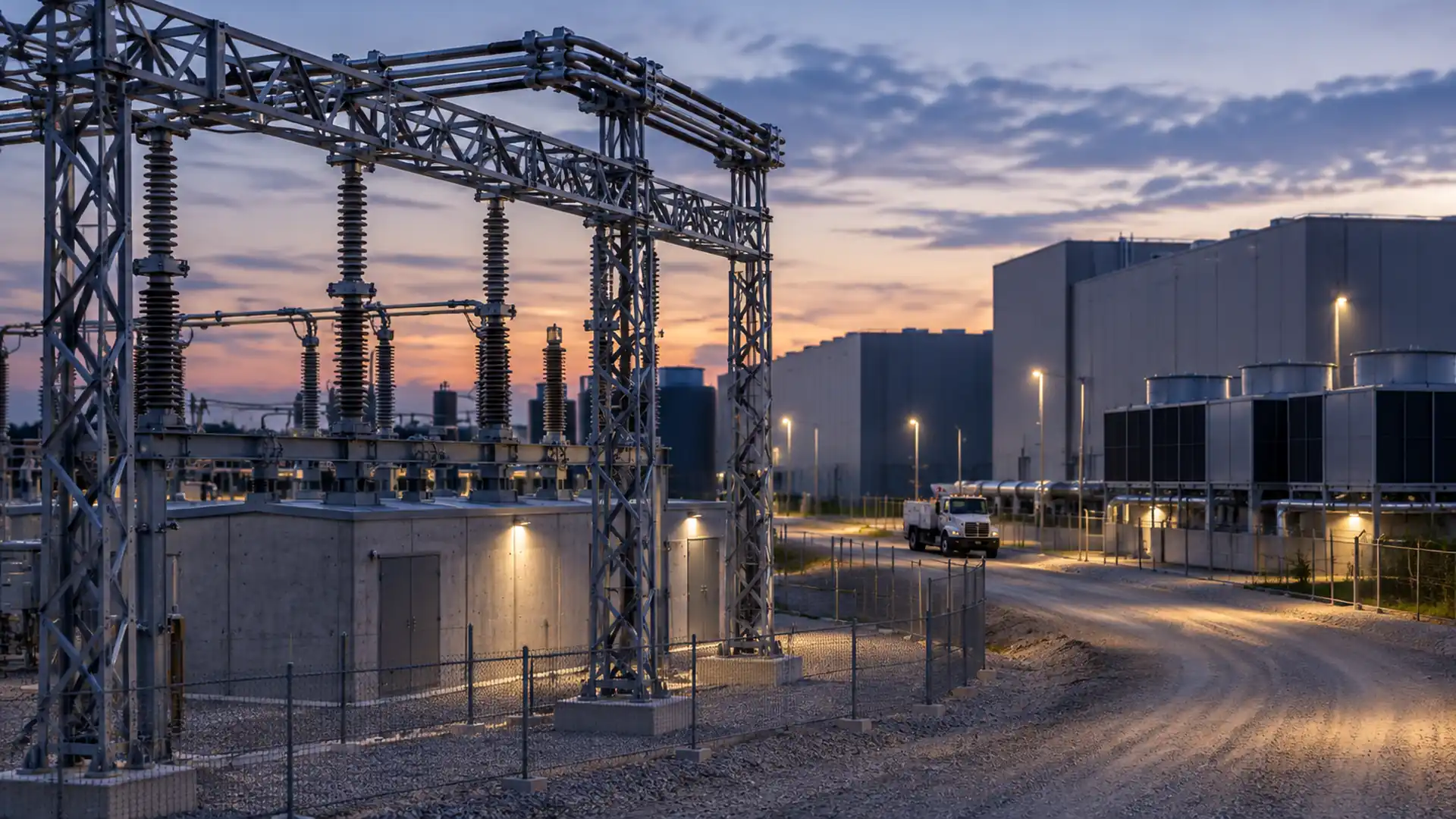
The grid's right to order the load off is being written now, and the lease decides who pays for the order. Riot Platforms was paid $24,664,000 for switching its own load off in the quarter to 30 September 2026, and it booked $18,429,000 from leasing load to AMD over the same three months. The first number is a credit against the power invoices for that load, recorded outside cost of revenue; the second is revenue, so the two are not like for like. What ties them is the site and the supply rather than the same megawatt: the credits are earned by pausing Riot's own Bitcoin Mining operations under the Rockdale and Corsicana power purchase agreements, and the Data Center power it leases out came entirely from ERCOT. The statute now reaches new load on the same grid, and Riot's 10-Q of 4 November 2026 sets it out: SB 6 “also requires ERCOT to ensure that utilities serving customers interconnected after December 31, 2025 develop protocols, including the installation of any necessary equipment before interconnection, to enable the curtailment of those loads during firm load-shed events”. That reaches you if you have signed or are about to sign an AI capacity reservation in ERCOT on load interconnected at transmission voltage after 31 December 2025, the cohort Cipher Mining's 10-Q of 2 November 2026 says the protocols cover, or on a new or expanded load of 75 MW or more at a single site, which the PUCT's interconnection standards already take in, or if you are the host selling that availability.
The $18.4 million of Data Center revenue in Riot's 10-Q of 4 November 2026 is not rent. Of that total, $10,173,000 is reimbursement of tenant fit-out, which the lease describes as the host's costs plus a margin, and $522,000 is variable lease revenue including power reimbursement. Operating lease revenue, the line a reader would compare with a rent roll, was $7,734,000. Against it sits $24,664,000 of curtailment credits, 3.19 times the rent and 1.34 times the whole segment. The credits split $22,938,000 of manual curtailment, where the host stops when the market price beats its fixed contract price, and $1,726,000 of demand response, where it is paid for the option to be told. A year earlier the line was $30,634,000 and all of it manual. The nine months run the other way, $55,741,000 against $46,748,000, so one quarter is not a trend. What is already true is the scale: at an issuer whose Data Center power was entirely obtained from ERCOT in 2026, the grid-paid line is worth more than the lease.
| Host and filing | What the filing says the grid can do | What the lease or the revenue line does about it |
|---|---|---|
| Riot Platforms, 10-Q filed 4 November 2026 | Curtailment or interruption of power “could also adversely affect our ability to meet our obligations to our data center tenants”, and its Corsicana load “could be capped or curtailed as other loads in the group increase their consumption, even if our own usage does not change” | Data Center power was entirely from ERCOT in 2026, and AMD pays power at pass-through rates; the disclosed terms price rent, pass the power through and reimburse fit-out, and do not state who bears a grid-ordered curtailment |
| IREN, 10-Q filed 5 November 2026 | Texas curtailment obligations named as an electricity market risk, beside voltage ride-through and frequency ride-through | AI Cloud Lease carries “availability commitments and related service-level credits”; $16m of $65m of lease revenue was subject to availability-related conditions |
| Cipher Mining, 10-Q filed 2 November 2026 | SB 6 directs the PUCT and ERCOT to establish protocols to curtail large loads interconnected at transmission voltage after 31 December 2025 during firm load-shed events | Names its tenants' transmission costs alongside its own, and says a move to 12CP or minimum demand charges could increase them |
| Core Scientific, 10-Q filed 5 November 2026 | New large loads “may be increasingly subject to mandatory curtailment”; Texas, where it intends four data centre facilities, subjects large loads to curtailment or disconnection during grid emergencies | Colocation power is passed through, which insulates cost and not the service obligation the tenant bought |
Riot Platforms, Form 10-Q filed 4 November 2026; IREN Limited, Form 10-Q filed 5 November 2026; Cipher Mining, Form 10-Q filed 2 November 2026; Core Scientific, Form 10-Q filed 5 November 2026, each for the quarter ended 30 September 2026. The SB 6 description in the third row is Cipher Mining's account of the statute. Mosaic Singularity analysis, November 2026.
Two of the four filings describe the statute. Cipher Mining's 10-Q of 2 November 2026 states the curtailment duty: SB 6 “further directs the PUCT and ERCOT to establish curtailment and demand-management obligations for large loads, including protocols to curtail large loads interconnected at transmission voltage after December 31, 2025 during firm load-shed events”. Riot's 10-Q of 4 November 2026 attaches a second mechanism to the same statute, a “reliability service under which ERCOT may direct large loads to reduce demand on short notice”. The rules the PUCT adopted in September 2026 and brought into force on 8 October 2026 were the large-load interconnection standards, a separate instrument covering financial security, disclosures, interconnection agreements and funding of direct interconnection costs. The curtailment protocols are the part still being written. What is already dated is the repricing: the PUCT must amend wholesale transmission cost-allocation by 31 December 2026, and on Cipher's account it is considering a move from four coincident peaks to twelve, and minimum demand charges based on contracted peak demand, measures that “could increase our or our tenants’ transmission-related costs”. The statute puts the obligation on the load. The lease decides which side of the meter pays for it.
Riot's risk factors are the plainest statement of the exposure in any of the four filings: “Any curtailment or interruption of power at our data center facilities could also adversely affect our ability to meet our obligations to our data center tenants.” The company has been curtailed under ERCOT and Oncor's testing and monitoring, and it says its Corsicana facility sits in a group whose consumption “could be capped or curtailed as other loads in the group increase their consumption, even if our own usage does not change”. Set that against the lease book: $626,221,000 of undiscounted base rent receivable on commenced leases, of which $393,963,000 falls after 2030. The obligation runs a decade or more. The disclosed lease terms price the rent, pass power through at cost and reimburse fit-out at cost plus a margin. They do not state who bears a curtailment the grid orders, and the tenant's remedy, on the structure IREN discloses, is a service credit against the rent rather than a right to the megawatt.
The $626,221,000 is base rent on commenced leases, and the book contracted but not yet billed is the larger one. In August 2026 Riot signed the Rockdale Lease for 191 MW of critical IT load to the Frontier AI Lab, 96 MW anticipated in December 2027 and the balance in June 2028, an initial term of 20 years from full deployment with two five-year options, power at pass-through rates and a senior secured delayed-draw term facility of up to $573.0 million to fund the long-lead equipment for that build. On 28 October 2026 it signed the Corsicana Lease with the same counterparty for 910 MW across 40 blocks and three phases, effective and binding on 4 November 2026, at base rent of $130.00 per kilowatt of critical IT load per month for each delivered block, which is $1,560 per kilowatt a year before the 3% annual escalation, triple net, with the tenant bearing the cost of the electricity it consumes and Riot operating and maintaining the power infrastructure. Neither disclosed description allocates a curtailment the grid orders, and both settle the cost of power rather than the availability of it. Riot's own reading is that its existing Texas facilities were interconnected before 31 December 2025 and the requirements should not apply to them, which would put the exposure on the capacity that energises later, 1,101 MW of it now signed under those two leases, rather than on the load already running.
IREN is the host that shows what the band costs, because it separates the two halves of its lease revenue. AI Cloud Lease brought in $65 million in the quarter to 30 September 2026 against nothing a year earlier, and of that $49 million was fixed or in substance fixed while $16 million was “lease revenue subject to availability-related conditions”. That is 24.6 cents of every dollar of lease revenue contingent on the load running, and it is the only disclosed measure of the band a tenant stands behind. The filing sets the mechanism beside it: “AI Cloud Lease arrangements include availability commitments and related service-level credits”, and revenue “generally begins only upon customer acceptance, and in certain arrangements is subject to service-level credits based on uptime and other performance requirements thereafter”. The flexibility income the same filing ties to its Texas site fell in the quarter the lease revenue arrived: other operating income was $2 million against $4 million, and the decrease was attributed primarily to lower demand response program income at Childress.
Riot Platforms, power curtailment credits
IREN, other operating income
Riot Platforms, Form 10-Q filed 4 November 2026, power curtailment credits. IREN, Form 10-Q filed 5 November 2026, other operating income, which the filing attributes primarily to demand response program income at Childress; the IREN bar is all other operating income, not demand response alone. Mosaic Singularity analysis, November 2026.
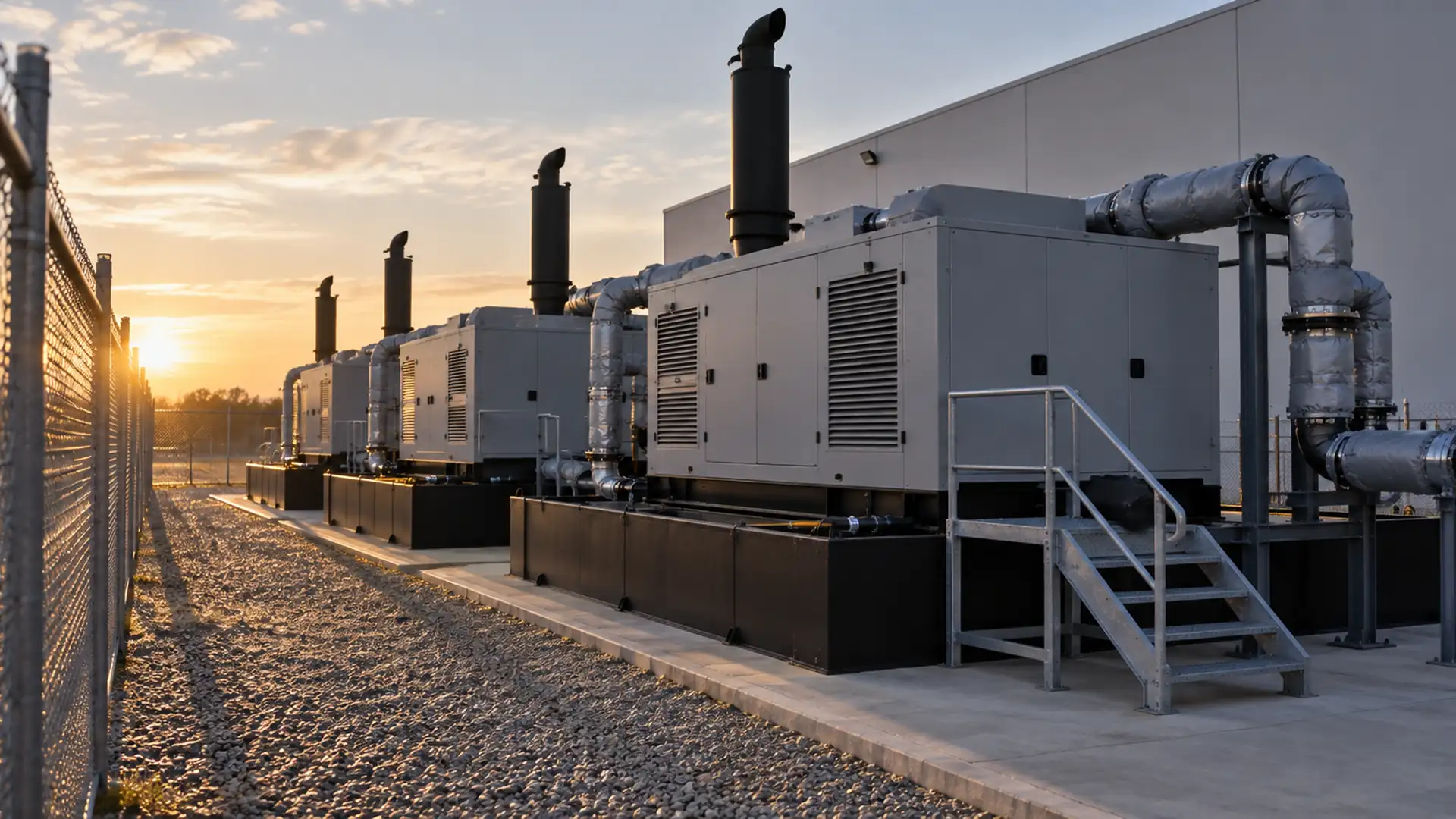
The gain sits with the host that can promise the hour, which means generation it controls rather than a contract with a grid operator. Cipher's filing names the gate: SB 6 “creates a new approval that is required for co-location of generation with large loads”. A host that wants to sell availability it can deliver now needs an approval it did not need before the statute, and the lead time on that is a queue, not an equipment order. The loser is the host that sold the availability first. Core Scientific, which intends four Texas data centre facilities, says new large loads “may be increasingly subject to mandatory curtailment”, and that its pass-through structure provides “an important degree of insulation from power price volatility” on its largest revenue stream. That insulation covers what the power costs. It does not cover what the tenant bought.
The PUCT's cost-allocation amendment is the second half of the exposure and it arrives on a date the record fixes. If allocation moves from four coincident peaks to twelve, or minimum demand charges attach to contracted peak demand, the number under a 2027 capacity reservation changes without either party to the lease agreeing to it. Cipher names both and puts the cost on either side of the relationship. Which side absorbs it turns on what the reservation says about curtailment, because a host and its tenant will read a peak-demand charge against whatever clause they signed. That clause is being written now, in the 55 days before the amendment.
| Seat | The action, and the artefact it touches | By when | The fact in this piece that makes it the move |
|---|---|---|---|
| Tenant CIO or head of infrastructure | Write the allocation into the availability schedule before signature: name force majeure, operator default or a scheduled window with a notice period, and set the service credit against the rent rather than against the invoice | Before signature, and re-paper any unsigned 2027 reservation by 31 December 2026 | A load interconnected after 31 December 2025 is inside the cohort the SB 6 protocols are written for, and IREN already shows 24.6 cents in the dollar being priced |
| Operator CFO | Take the curtailment credit out of the revenue it is budgeted against and reconcile the flex line only to megawatts that are not leased | Before the 2027 budget is locked, and no later than 31 December 2026 | Riot's credits were 3.19 times its operating lease revenue in the quarter to 30 September 2026, at a host whose Data Center power was entirely ERCOT |
| General Counsel | Establish whether any reservation allocates a grid-ordered curtailment, and if the only remedy is a service credit, put a number on the reserve | 31 December 2026, when the PUCT amends cost allocation | Riot's own risk factor concedes curtailment could impair performance to tenants, and none of the four filings states an allocation |
| CFO and procurement | Price firmness as a third option beside rent and grid power: on-site generation, an availability band that excludes grid-ordered curtailment, or a lower rent with the credit accepted | 31 December 2026, before the reservation is executed and while the curtailment protocols are unwritten | The only durable fix needs an approval that did not exist before the statute |
Actions derived from Riot Platforms, Form 10-Q filed 4 November 2026, IREN Limited, Form 10-Q filed 5 November 2026 and Cipher Mining, Form 10-Q filed 2 November 2026, each for the quarter ended 30 September 2026. The 31 December 2026 date is the deadline for the PUCT to amend wholesale transmission cost-allocation rules, as described in Cipher Mining's filing. Mosaic Singularity analysis, November 2026.
One decision is the board's or the chief executive's rather than a function's: whether to approve a 2027 capacity reservation whose curtailment allocation is unstated, at an availability band no filing in this set prices from the tenant's side. The general counsel's finding on the clause and the CFO's number for the reserve behind it are the two papers that decision sits on, and both are due before 31 December 2026, the date the PUCT must amend cost allocation. The questions below are how a board tests whether those papers exist.
The PUCT amendment is the date this reading is scored. If it leaves four coincident peaks in place and attaches no minimum demand charge, the repricing half fails and only the allocation stands, and the exposure reduces to a contract problem rather than a cost one. If Riot's next 10-Q reports curtailment credits below its operating lease revenue while its leased load keeps growing, the flexibility is being given up rather than displaced and the trade has turned. Then watch IREN's 24.6 cents: if the availability-contingent share of AI Cloud Lease revenue rises in the quarter to 31 December 2026, tenants are carrying more of the grid, and that share is the number to negotiate against the rent. Riot's Form 10-Q for the quarter to 31 December 2026 is due on 9 February 2027, 40 days after the quarter closes for a large accelerated filer.
This reading rests on four quarterly reports, each for the period ended 30 September 2026.
Share this
Related