ReportOwnershipAnnika Sorensen11 min read
ReportOwnership


| Term | NVIDIA guaranty | Broadcom backstop |
|---|---|---|
| Instrument and date | Residual value guaranties with SB Energy as lessor, Form 8-K filed 17 August 2026; form of guaranty filed as Exhibit 10.1 to the Form 10-Q on 26 August 2026 | Residual value support to a special purpose vehicle, Form 8-K filed 27 October 2026 |
| Who is protected | The landlord, on leases for about 4.25 GW of IT load at a Pike County, Ohio campus | A newly formed special purpose vehicle, with financial partners taking on part of the agreements |
| What triggers payment | Tenant insolvency default or failure to pay rent, and only after the landlord pursues the tenant's insurance and the parent guaranty | A lease default by the customer |
| Cap or formula | $105bn cumulative, on the shortfall against a guaranteed minimum value built from data centre, power and transmission costs | 72.5% of outstanding lease amounts less rack resale value, to about $43bn undiscounted on full deployment |
| What ends it | The tenant or its parent being rated, a bank instrument, a rated replacement tenant, or the 20th anniversary | Not stated in the filing; the amount falls as the customer pays |
| Tenant named | An affiliate of OpenAI Group PBC, named in the 8-K and redacted in the guaranty form | Not disclosed |
NVIDIA Form 8-K, 17 August 2026; NVIDIA Form 10-Q Exhibit 10.1, 26 August 2026; Broadcom Form 8-K, 27 October 2026
Two suppliers have now put a floor under the value of the capacity they sell, and the floor is written for the party that owns the building. NVIDIA's is capped at $105bn, covers 4.25 GW of IT load, and releases itself once its tenant or its parent is rated. Broadcom's covers the gap between 72.5% of the outstanding lease amounts and what the racks fetch on resale, to a maximum of about $43bn, undiscounted, on full deployment. Neither filing gives the tenant a right, a cap or a release from its own lease, and neither discloses what the tenant gives for the support. For a company signing dedicated AI capacity on the strength of a supplier guarantee, three terms decide what that guarantee is worth: the release test, the parent guaranty, and who owns the equipment when it stops earning.
Landlord has agreed to enter into the Lease, and the Power Affiliate has agreed to enter into the PPA and the Transmission Agreement (collectively, the “Project Agreements”) if and only if Guarantor executes and delivers to Landlord this Guaranty.
The guaranty is not a side letter, and the form NVIDIA filed with its Form 10-Q for the quarter ended 26 July 2026 says so in the recital quoted above. The guaranteed minimum value is defined around the landlord's own build: the filing states that it “is comprised of data center, power, and transmission related costs” and relates to 4.25 GW of critical IT load. NVIDIA can extend credit support to a further 3.8 GW at its sole discretion, and the obligations begin when premises are ready for service, expected from 2028.
Broadcom's version is the same trade in a different wrapper. On 26 October 2026 it arranged for financial partners to take on part of the agreements to buy AI racks built on its own custom accelerators, and the related leases with its customer, then supplied residual value support to the vehicle that holds them. The liability is the gap between 72.5% of the outstanding lease amounts and what the racks fetch on resale, so 27.5% of every lease sits outside the formula, and the amount falls as the customer pays. The filing calls the backstop “a contingent liability the Company believes has a low probability of occurring”, states no end date, and does not name the customer.
The order of payment is set by the guaranty, not by the announcement. Section 8 bars the landlord from enforcing against the supplier “unless Landlord is concurrently therewith and in good faith concurrently pursuing” the tenant's business interruption and rental loss insurance, and “enforcement of all commercially reasonable remedies against Tenant Parent pursuant to the Tenant Parent Guaranty”. The tenant's parent has already joined the lease to guarantee every obligation of the tenant, and OpenAI has separately agreed to “reimburse and indemnify NVIDIA for any and all amounts actually paid by NVIDIA to the Lessor”. The supplier pays the remainder, after the parent and the insurer have been pursued. The filing discloses no reduction in the tenant's rent and no cap on its exposure, and does not state what the tenant receives for the parent guaranty it has given.
Section 13 of the guaranty releases the supplier automatically, and only on the events it lists. Nine limbs sit under it. Three, limbs (vi), (vii) and (viii), are redacted in full, so the public record does not show how many other release events the guaranty provides for. Every limb that turns on credit carries a redacted threshold, so the number that ends $105bn of contingent exposure is not on the public record. The list below is the rest of what the filed exhibit shows.
The shape of that test tells a treasurer what the instrument is. The support stops when the tenant can borrow in its own name, which is the point at which a refinancing gets cheaper and the lease keeps running. A tenant that has not been told the threshold cannot know whether the guarantee will survive the financing it is planning. The 8-K states the same release in six words: “OpenAI achieving a satisfactory credit rating”.
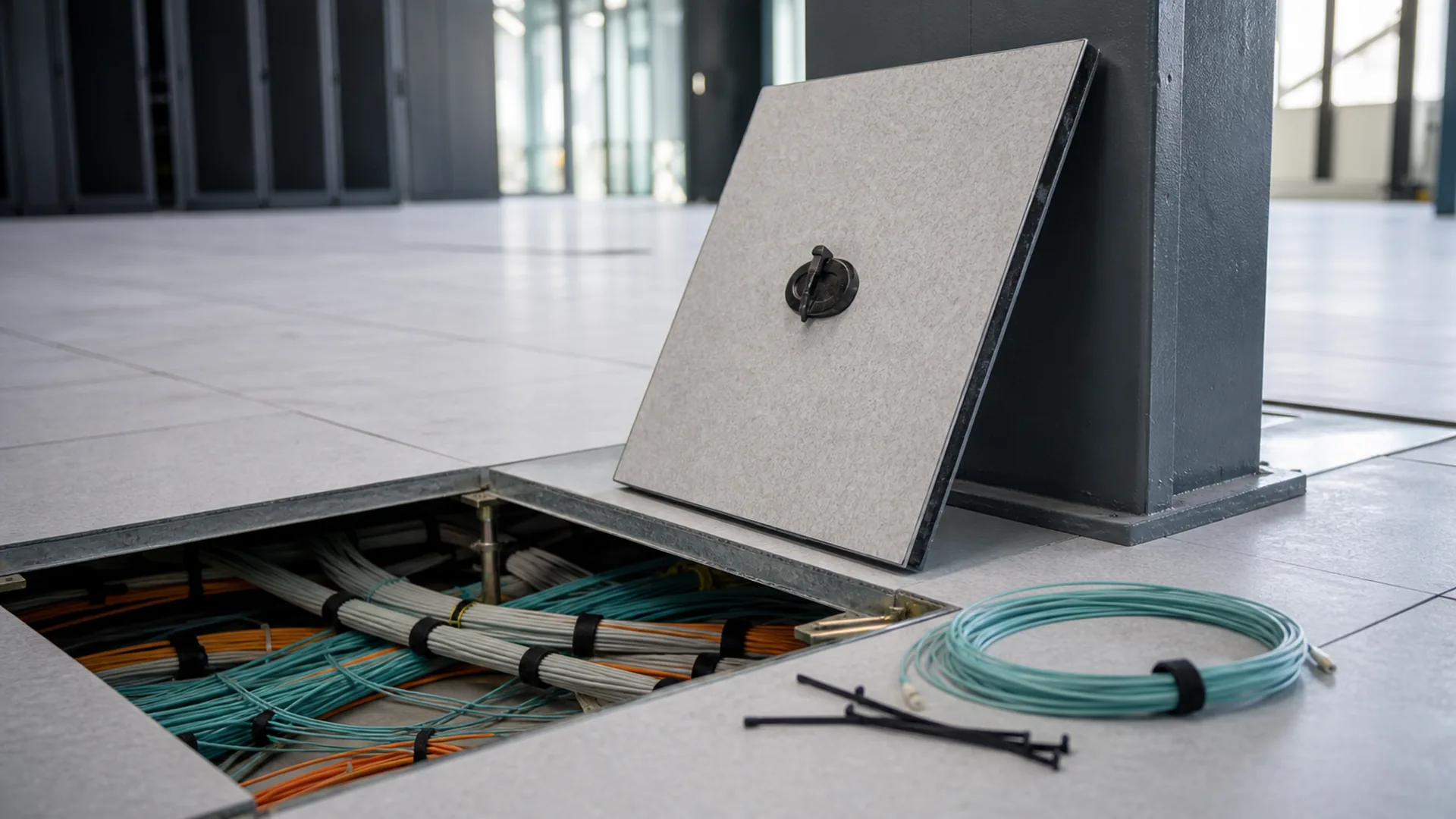
The form also settles what the landlord can reach. The landlord waives every right it has to the supplier's property in the building, “including any right to levy or distrain upon, or to claim or assert any lien, security interest, right, claim or title”, and the supplier keeps the right to enter, appraise, repossess, remove and sell that equipment, but not by public auction or any sale open to the public. The tenant is liable to the supplier for the replacement cost of any of it lost or damaged, other than through the supplier's own actions. The accelerators that make the lease worth signing are therefore outside the collateral pool, and a lender to the project is underwriting a building, a power contract and a lease, not the compute.
The consideration runs the other way, and it is specific. NVIDIA's 8-K requires the tenant to deploy “NVIDIA’s full-stack DSX AI factory platform, subject to limited exceptions” across the guaranteed capacity, so the credit support is attached to a stack decision taken once and held for two decades. Akamai's version of the trade is capital and equity. Its Form 8-K for the event of 18 September 2026, filed 24 September 2026, records a commitment of approximately $11.6bn under Project Plan 2 and Project Plan 3, each with an initial seven-year term, and a warrant over up to 7,741,020 shares on an as-converted basis, 40% of it vesting on the first payment under Project Plan 3 and the rest in $3bn steps as Anthropic commits more. Exhibit 99.1 to that filing, the press release of 24 September 2026, puts the warrant at up to approximately 5% of Akamai's common stock outstanding and estimates capital expenditure related to the commitment at approximately $5.5bn.
Two parties gain and the tenant gains no rights. The landlord gains a minimum value underwritten by the party that supplies the technology. The supplier gains a stack commitment or a growing purchase commitment, and its shareholders carry the tail: $148bn of stated caps across the two filings, $105bn of it NVIDIA's, offset by a reimbursement and indemnity claim on the same tenant whose rent the guarantee covers. The tenant gains capacity on terms it could not otherwise sign, and takes on a parent guaranty, a reimbursement obligation and equipment it will never own.
By 30 November 2026 the board resolves the first question below, the register of capacity contracts carrying a supplier guarantee and the named beneficiary of each, and puts the rest to management for answer against that register. The register is tabled before the next signature and carries, for each contract, the stated cap and the release threshold where the contract states one. A guarantee whose beneficiary is the landlord is not an asset of the tenant, and the register is the only place a board sees that difference across a portfolio.
The number to hold these suppliers to is the one they left blank: the rating at which the support stops. A buyer who knows that threshold can price the guarantee. A buyer who does not is accepting a term whose expiry belongs to someone else, on a lease that outlives it. The instrument is now on the record in two filings 71 days apart, with $148bn of stated caps between them, and the next test is whether a third supplier puts its own name behind the next campus.
Share this
Related